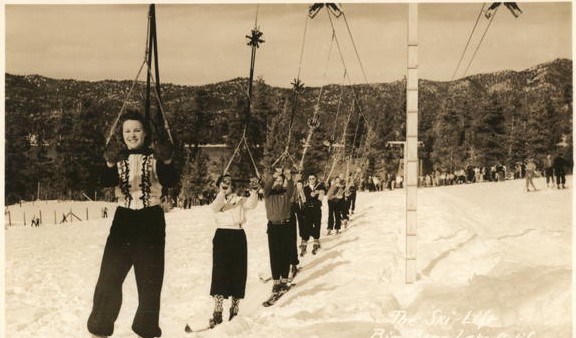
Big Bear Lake didn’t start as a vacation destination, it gradually became one. Long before visitors showed up, the valley was home to the Serrano people, who lived off the land and used the area’s natural resources.
Things really changed in the mid-1800s when gold was discovered. Prospectors moved in, and over time the area shifted from a remote mining spot into a place people started coming to for the scenery and cooler mountain climate.
Now, when you’re in Big Bear—whether you’re by the lake, walking through the Village, or out in the forest—you’re in the same areas that shaped how it developed. You don’t really have to think about the history to notice it, but it explains why everything is where it is today.
Big Bear Lake History Overview
Origins of Big Bear Lake
Before it became a destination, Big Bear Valley was home to the Serrano people, who lived throughout the San Bernardino Mountains and relied on the area’s water sources, plant life, and wildlife for daily life. The valley’s elevation, natural springs, and forested environment made it a sustainable place to live long before outside settlement began.
The lake itself did not exist in its current form until the late 1800s. In 1884, a dam was built to store water for irrigation in the growing citrus regions below the mountains, transforming the valley into what is now Big Bear Lake. This change not only reshaped the landscape but also made the area more accessible and relevant to surrounding communities.
Why It’s Called Big Bear
The name “Big Bear” dates back to the 1800s, when early explorers encountered a large population of grizzly bears in the valley. The area was originally referred to as “Bear Valley,” a name that reflected how common bears were throughout the region at the time.
Although grizzly bears have long since disappeared from Southern California, the name has remained and continues to define the area. Today, it’s reflected in everything from local landmarks to the identity of Big Bear as a mountain destination.
How Big Bear Became a Travel Destination
The Gold Rush and Early Settlement
Big Bear’s shift toward development began in the 1860s, when gold was discovered in the surrounding mountains. Prospectors moved into the valley, setting up mining camps and rough infrastructure to support their work. At the time, it was a remote and difficult-to-reach area, but the promise of gold brought steady activity and marked the beginning of outside settlement.
That part of Big Bear’s history is still reflected in the area today. You can visit sites tied to early mining or take part in experiences that let you mine for gold like the settlers, which gives a more direct sense of how the valley was first used.
Growth of Big Bear Valley Communities
As gold mining slowed, the focus gradually shifted from extraction to recreation. Improvements to roads and access, especially in the early 1900s, made it easier for visitors to reach the mountains, and the valley began to attract people looking for a cooler climate and time outdoors.
Pine Knot Village became one of the earliest organized tourism areas, originally developed as a resort destination. Today, it remains the central hub of Big Bear, and its layout still reflects those early efforts to turn the area into a place people would return to, not just pass through.
Historic Places to Visit in Big Bear Today
Pine Knot Village and Early Tourism
Pine Knot Village remains one of the most historically significant areas in Big Bear. Originally developed as a resort destination, it still functions as the main center for dining, shopping, and local activity.
Visitors can walk through the area and experience a layout that reflects the early days of tourism in the valley. Staying in cabin rentals near historic Pine Knot Village puts you close to both the history and the present-day activity.
Museums and Preserved Landmarks
For a deeper look at the history of Big Bear Lake CA, the Big Bear Valley Historical Museum provides insight into early settlement, mining, and daily life in the region.
You can learn more about the Big Bear Valley History Museum or explore other historical places and sites in Big Bear, CA to see how the area has been preserved over time.
How Cabins Became Part of Big Bear’s Identity
Early Cabin Living in Big Bear Valley
Cabins became part of Big Bear’s identity because of how people originally visited the area. In the early 1900s, once roads improved and tourism began to grow, visitors needed simple places to stay for extended trips in a remote mountain setting. Hotels were limited, so small, wood-built cabins became the standard.
These early cabins were designed around function: close to the forest, near the lake, and built for longer stays where people cooked their own meals and spent most of their time outdoors.
The Evolution of Big Bear Vacation Rentals
Over time, those original cabins were expanded and modernized, but the core idea didn’t change. Today’s vacation rentals still follow the same pattern: private homes with space, kitchens, and access to the outdoors, rather than dense, hotel-style development.
This is why Big Bear feels different from other destinations. When you visit Big Bear, CA today the experience is still centered around having your own space and using it as a base for everything else. Cabins aren’t just a lodging option here; they’re a direct continuation of how people have been visiting Big Bear for over a century.
Where to Stay to Experience Historic Big Bear
Where you stay has a direct impact on how you experience Big Bear’s history. The area isn’t built around hotels or large developments—instead, it’s made up of distinct neighborhoods that reflect different parts of its past. Choosing the right location lets you experience that history in a more direct way.
Cabins Near the Village and Historic Areas
Staying near the Village places you in one of the oldest and most active parts of Big Bear. Pine Knot Village was originally developed as a resort destination, and it remains the central hub for dining, shopping, and local activity.
Cabins in this area give you:
- Walkable access to restaurants, shops, and historic streets
- Close proximity to the lake and early tourism landmarks
- A central location that makes it easy to move around without long drives
You can explore cabin rentals near historic Pine Knot Village if you want to stay where Big Bear’s tourism history began while still being in the middle of everything today.
Quiet Stays in Fawnskin and Surrounding Areas
Fawnskin offers a quieter, more residential side of Big Bear that feels closer to how the area looked before large-scale tourism developed. Located on the north shore of the lake, it has remained less built up, with more open space and a slower pace.
Cabins in this area are typically:
- Set further apart with larger lots
- Closer to the forest and north shore views
- Less affected by traffic and busier tourist areas
Browse rustic Fawnskin cabins if you’re looking for a setting that reflects the quieter, less developed side of Big Bear.
Cabins Surrounded by Forest and Wilderness
For a stay that feels closest to Big Bear’s early landscape, cabins along the forest edge provide the most space and separation. These areas are where the transition from town to wilderness is most noticeable, and where the environment still feels largely unchanged.
These cabins are often:
- Located near trailheads or forest access points
- More private, with fewer nearby properties
- Oriented around outdoor space rather than central location
You can find rental cabins bordering the wilderness if your goal is to experience the natural side of Big Bear in a more direct way.
Experience Big Bear’s History Through What You Do
Interactive and Outdoor Experiences
You don’t have to go out of your way to experience Big Bear’s history. The history of this place is built into the way people spend time here. From being out on the lake to exploring the Village or heading into the forest, most activities follow the same patterns that first drew visitors to the area.
Experiences that tie into that history include:
- Gold panning and mining-style activities based on the 1860s gold rush
- Exploring forest trails and open land that follow early access routes
- Spending time near the lake and shoreline areas that supported early settlement
Local Attractions with Historical Significance
Several of Big Bear’s current attractions are directly tied to its past, even if they’ve evolved over time. Areas like Pine Knot Village, the north shore near Fawnskin, and preserved museum sites all reflect different stages of the valley’s growth.
You can explore Big Bear Valley history in more detail or visit locations like the historical museum to see how the region developed from a mining outpost into a year-round destination. Many of these places still retain elements of their original layout, which is part of what makes them worth visiting today.
Plan Your Stay with Big Bear Vacations
Booking a cabin in Big Bear isn’t always straightforward, photos can be misleading, locations can be confusing, and not every place is set up the way you expect.
Big Bear Vacations keeps things predictable. Our homes are managed locally so, what you see is what you get, and our team is available if you need anything during your stay. It’s a simpler way to book, especially if you don’t want to deal with guesswork.
Explore Available Cabin Rentals
If you’re ready to start looking, you can view all available Big Bear Vacations cabins in one place and compare locations, layouts, and features side by side.
Our properties are professionally managed, accurately represented, and set up for a full stay. That means they’re equipped with full kitchens for meals, comfortable living space for downtime, and features like fireplaces, hot tubs, or outdoor areas that make it easy to settle in after a day out.
It also means details are handled ahead of time, from clear check-in instructions to properly maintained homes, so you’re not dealing with gaps or surprises once you arrive. That makes it easier to find something that fits how you plan to spend your time.
Get Local Recommendations
If you’re not sure where to stay, getting input from a local team can save time and avoid mismatches.
Big Bear isn’t one uniform area, staying near the Village, the lake, or the slopes can lead to very different experiences. When you connect with a local expert, you can narrow down options based on your trip, rather than guessing based on a map or listing photos.